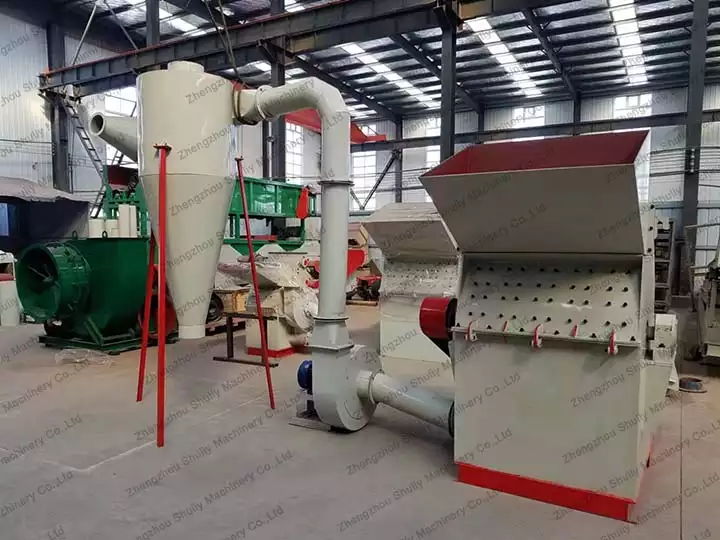
Hammer Mill vs Wood Crusher: Which One Do You Need for 5- 10mm?
Ask us which machine makes 5- 10 mm sawdust and the honest answer is: both of them. Our дробилка древесины grinds down to 3-8 mm on a standard screen, and our молотковая дробилка is built around 5-10 mm. The outlet number is not the decision.
The decision is made at the inlet. Here is the short version before we get into the detail.
| Your material as it arrives | The machine you need |
|---|---|
| Logs, branches, bark, formwork, pallet blocks – anything 10-30 cm and unprocessed | Wood crusher (one machine, raw waste straight to sawdust) |
| Wood chips from a shredder or chipper, 2-6 cm, or charcoal briquettes and agricultural fiber | Hammer mill (grinds semi-processed stock finer and more evenly) |
| Mixed: bulky waste now, but you need over 1.5 t/h of uniform powder plus dust control | Both, in series – crusher or shredder in front, hammer mill behind |
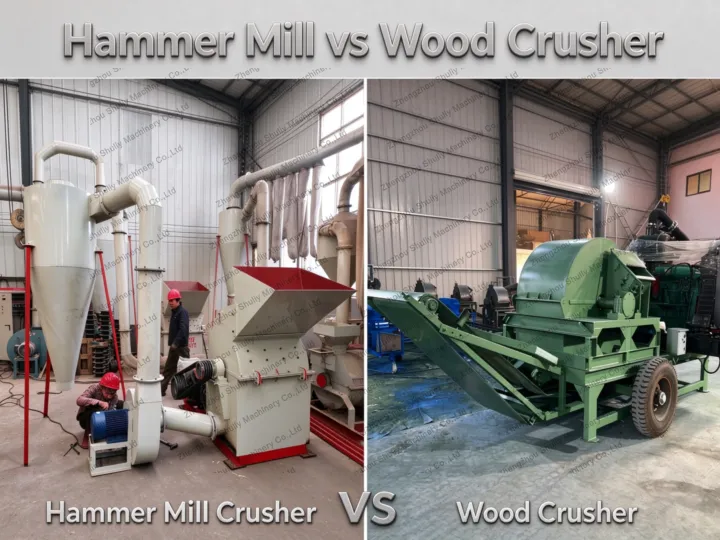
What a wood crusher actually does
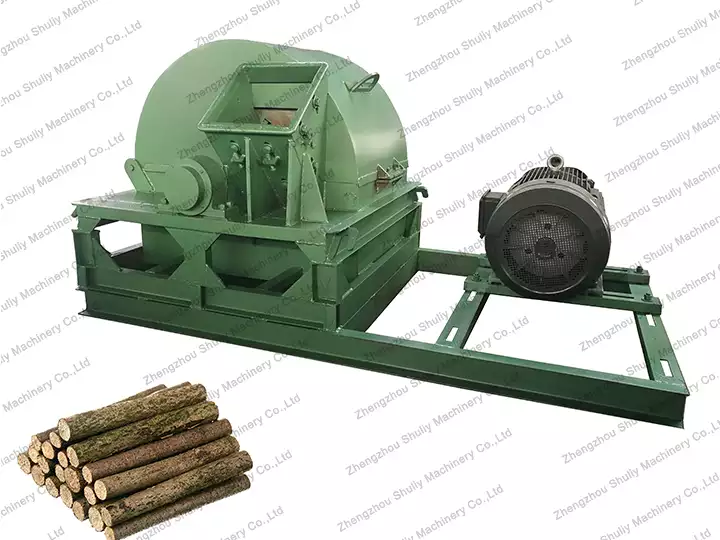
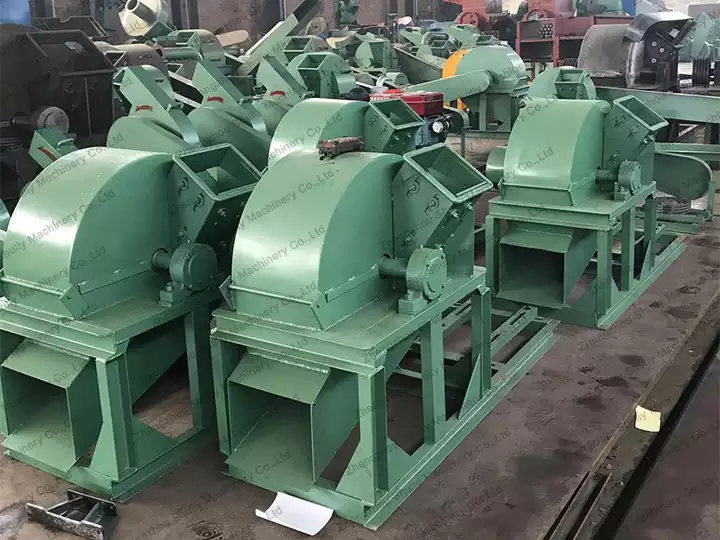
The wood crusher is a single-stage solution for raw, bulky, awkward material. Inside the chamber, a knife plate and blades take the first bite – they shred a log or a piece of formwork into strips – and then high-speed rotating hammers beat those strips down until they pass the screen. Material that is still too big stays inside and gets hit again, which is why the screen aperture sets your final size.
Because blades and hammers share the work, the machine can swallow things a grinder cannot: 10-30 cm rounds, branches, twigs, bark, pallet offcuts, even straw. Capacity runs from 300 kg/h on the SL-420 up to 4,000 kg/h on the SL-1200, driven by an electric motor or a diesel engine, and one person can feed and run it.
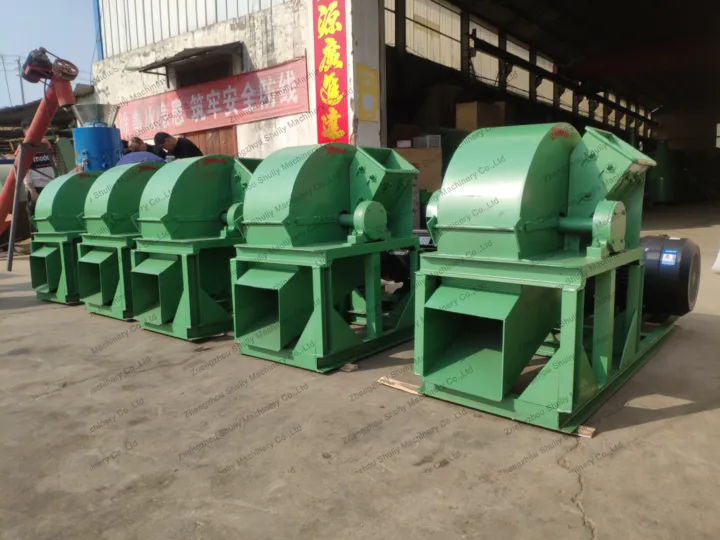
What a hammer mill crusher does differently
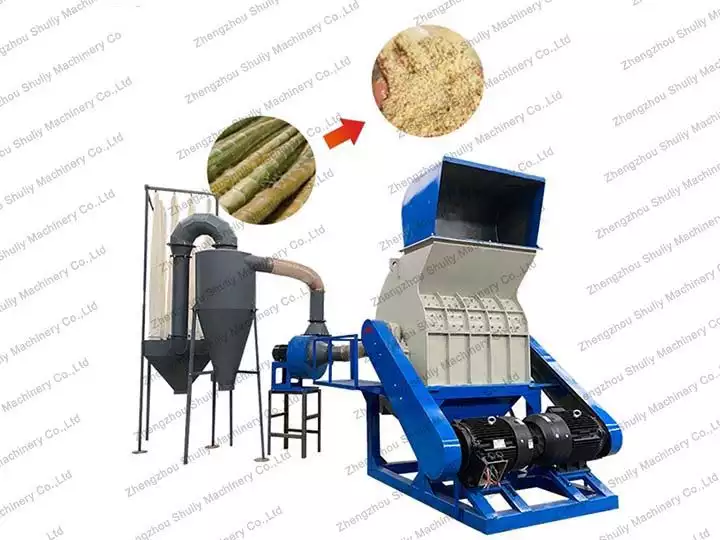
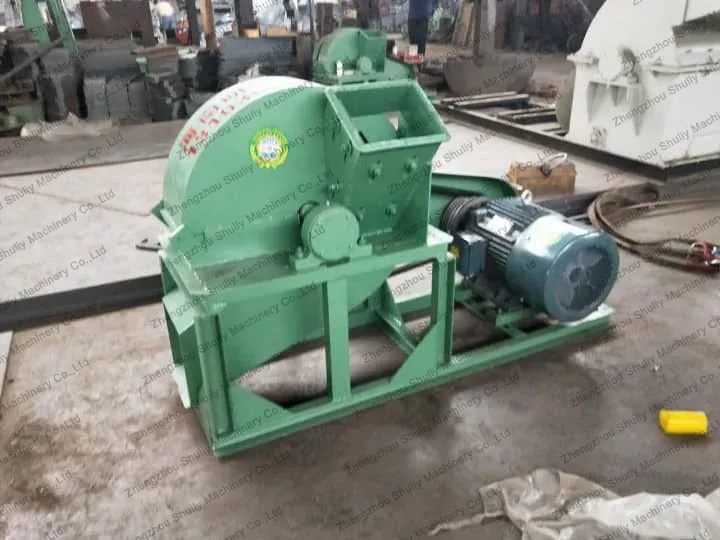
A hammer mill has no cutting stage. A rotor carries between 30 and 105 swinging hammers depending on model size, and the material is reduced purely by impact until it is small enough to fall through the screen. That makes it the wrong tool for a whole log and the right tool for stock that has already been broken down: 2-6 cm chips, charcoal briquettes being re-ground, straw, palm fiber, bagasse, coir, and industrial or biomass residues.
Two things follow from that design.
- First, uniformity – the impact-and-screen action produces a more even 5-10 mm particle than a machine relying on shearing, which matters when the powder is going into a pellet mill die or a briquette press.
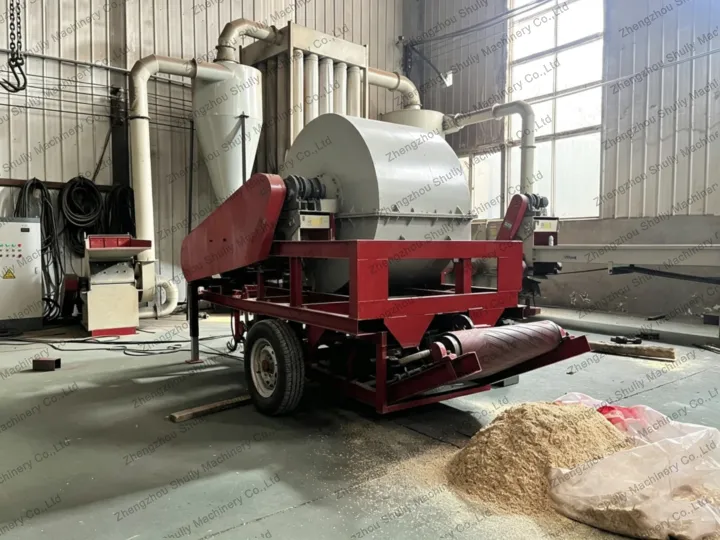
- Second, dust handling is designed in. From the SL-HM80 up, there is a built-in fan (7.5 kW to 22 kW), 14 dust-remover elements, and a 1 m cyclone, so the machine blows its own product clear instead of filling the shed with airborne fines.
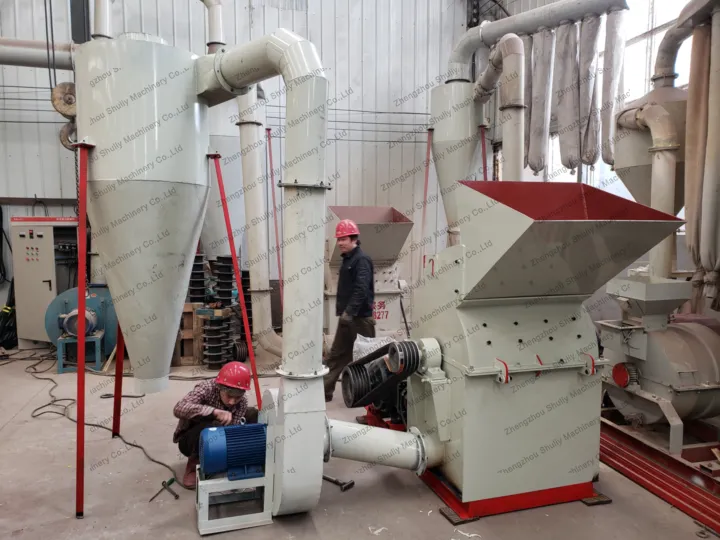
Hammer mill vs wood crusher: specifications side by side
| Машина для дробления древесины | Молотковая дробилка | |
|---|---|---|
| Feed size | 10-30 cm raw wood waste, logs, branches, bark | 2-6 cm chips and semi-processed stock, charcoal, agri residue |
| Reduction method | Blades cut, then hammers beat | Hammer impact only |
| Размер выхода | 3-8 mm on the standard screen | 5-10 mm |
| Емкость | 300-4,000 kg/h | 0.6-5 t/h |
| Власть | 11 kW to 90 kW, motor or diesel | 22 kW to 90 kW |
| Model range | SL-420, 500, 600, 700, 900, 1000, 1200 | SL-HM60, 70, 80, 90, 1000, 1300 |
| Dust system | Cyclone option fitted at the outlet | Fan and cyclone from SL-HM80 up |
| Operators | 1 | 1 |
| Best role | Standalone first machine on unprocessed waste | Fine grinding behind a shredder, or on charcoal and fiber |
Pick the wood crusher if
- Your feedstock arrives as whole or bulky waste – logging residue, formwork, branches, bark, pallet offcuts. A hammer mill will not accept it.
- You want one machine and one motor to go from scrap pile to sawdust, at the lowest entry cost.
- Your target is charcoal powder feedstock, paper stock, board plant, mushroom substrate, or bedding-grade fines below 1 t/h.
- Your site has no stable power and you need a diesel-driven unit that can be moved between piles.
Pick the hammer mill if
- You already run a chipper or a [shredder] upstream, so 2-6 cm chips are your normal state of material.
- You are grinding charcoal briquettes back to powder, or processing straw, palm fiber, bagasse, or coir.
- Particle consistency matters downstream – a [pellet mill] or briquette press eats uneven fines poorly and wears out on them.
- You need 1.5-5 t/h continuously, indoor dust control, or a wheeled diesel unit for outdoor work.
The line most buyers end up running
In practice, this is rarely an either/or at plant level – it is a question of which stage you are buying.
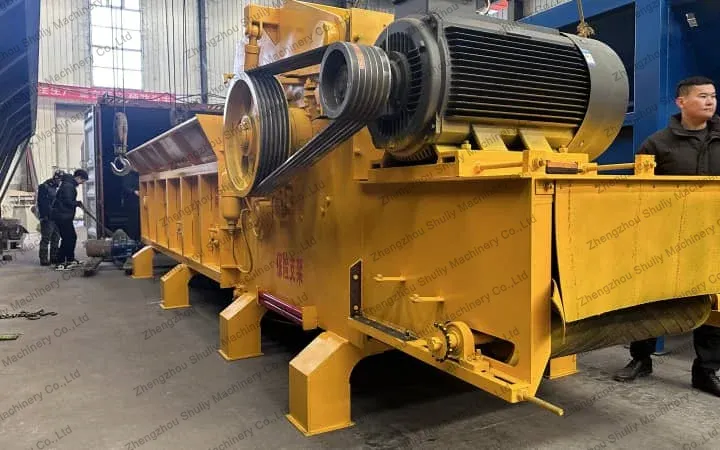
A recycling yard takes in old pallets and demolition timber shreds first on a machine that pulls the nails out and drops 2-6 cm chips, then grinds those chips to a consistent 5-10 mm on a hammer mill before the pellet line.
A buyer who only has clean logging residue and a modest hourly target skips the middle step entirely and runs one wood crusher.
If you are unsure which side of that line your material sits on, measure a handful of your worst pieces rather than your average ones. Feed size is the specification that gets orders wrong.
Real orders, both machines
- Молотковая мельница производительностью 1000 кг/ч продана в Бразилию
- Экспорт промышленной молотковой мельницы в Индонезию.
- Молотковая мельница по дереву производительностью 500-600 кг/ч отправлена на Мальту
- SL-1500 wood crusher for Korean forestry biomass fuel production
Hammer mills of ours also run in Egypt, Venezuela, South Africa, Somalia, Nigeria, Kyrgyzstan, and Malaysia, on wood, charcoal, and agricultural feedstocks.
FAQ of hammer mill vs wood crusher
Can a wood crusher produce 5- 10 mm like a hammer mill?
Yes. On its standard screen, the wood crusher delivers 3-8 mm, which covers the 5-10 mm band. The difference is consistency and rate: the hammer mill’s impact-and-screen action holds a more even particle at 1.5-5 t/h, while the crusher wins on accepting bulky raw feed.
Can I put whole logs into a hammer mill?
No. A hammer mill grinds semi-processed material – typically 2-6 cm chips, charcoal briquettes, straw, palm fiber, or coir. Whole logs, branches, and bark need a wood crusher, which cuts with blades before the hammers refine the material.
Do I need both machines?
Recycling and demolition operations usually do: a shredder takes bulky material down to chips, and a hammer mill finishes those chips to uniform powder. Yards working only with clean wood residue can meet most targets with a single wood crusher.
Which machine is better for feeding a pellet mill?
The hammer mill. Pellet dies need a consistent 5-10 mm particle, and from the SL-HM80 up the machine carries its own fan and cyclone, so dust is handled at the same station that feeds the press.
Send us a photo of your material and the size of your largest piece, through [the contact page], and we will tell you which of the two – or which pair – fits your line rather than upselling the bigger machine.